
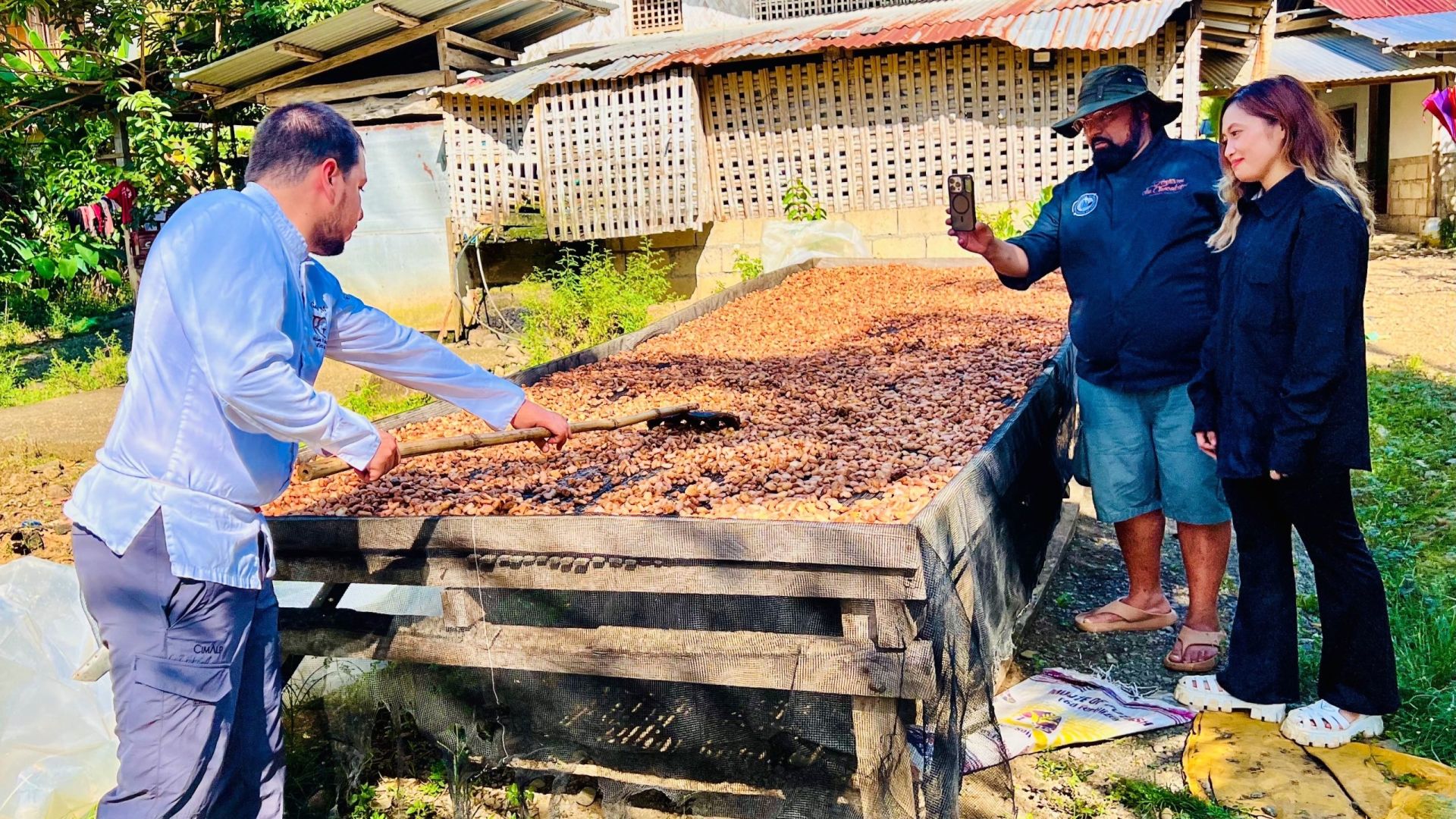






Palawan is often imagined through turquoise waters and limestone cliffs—but beyond its tourism image lies a quieter, more complex frontier: agriculture. In particular, cacao has emerged as a crop of both promise and uncertainty. With growing global demand for fine chocolate and renewed government interest in cacao development, the province now stands at a crossroads.
So the question remains: Is there really a future for cacao in Palawan?
To answer this, one must listen not only to policy frameworks and industry reports—but to the voices of those who have seen Palawan’s cacao firsthand.
 History of cacao in Palawan
Cacao was introduced to the Philippines—including regions such as Palawan—during the Spanish colonial period, specifically in the late 17th century (circa 1670). The first Criollo cacao seedlings were transported from Acapulco, Mexico to Manila through the historic Manila–Acapulco Galleon Trade. Initial cultivation was concentrated in Luzon, particularly in Batangas, and in the Visayas, such as Cebu. Over time, cacao farming spread across the archipelago, including island provinces like Palawan, largely through the efforts of Spanish friars who promoted it as a viable cash crop. While Davao is widely regarded today as the country’s cacao capital, the Philippines has maintained a continuous history of cacao cultivation for more than 300 years.
In 2016, the Provincial Government of Palawan (PGP), under the leadership of Jose Chaves Alvarez, distributed thousands of cacao seedlings to local farmers, with a strong focus on the southern municipalities of the province. A decade later, these seedlings have matured into productive trees, now bearing fruit and serving as a significant source of income for farmers, particularly in the municipalities of Brooke’s Point, Aborlan, and Bataraza. Farmers in Brooke’s Point reported that, at one point following the pandemic, they were producing cacao primarily for Kennemer Foods International, a leading Philippine agribusiness firm specializing in the sourcing, processing, and trading of agricultural commodities, including cacao, bananas, and abaca.
By 2023, national government agencies such as the Department of Science and Technology (DOST) and the Department of Trade and Industry (DTI) began to show increased interest in Palawan’s growing cacao industry. This attention can be attributed to a convergence of economic opportunity, agricultural potential, and broader strategic development goals. Both agencies are aligned with the national agenda of inclusive growth, and cacao is particularly well-suited for smallholder farmers, who make up the majority of the country’s agricultural sector. Moreover, cacao is highly compatible with intercropping systems, especially with coconut, making it an ideal crop for sustainable farming.
The DTI–Palawan provided support through equipment provision and capacity-building programs focused on chocolate production, while DOST–Palawan introduced farmers to Good Agricultural Practices (GAP), particularly in cacao bean fermentation and drying, as well as in research and development for new product innovation. To further strengthen local capacity, DOST–Palawan brought in industry experts from Baguio City, including Ms. Angeleah Montilde of KoKoMo Chocolate and Mr. Melvin Allan M. Hipol of Brewsco Coffee Roasters, to train farmers in proper fermentation and drying techniques.
On January 22, 2026, Montilde returned to Palawan, accompanied by three French chocolatiers engaged in the global chocolate industry: Mr. Gabriel Mjahed of Chocolatiere_RG-Luxembourg, Mr. Mathias Jean Anicet Bertrand of Reine Astrid, and Mr. Abdel Aziz el Baiz of L’Artisan du chocolat. Together with a DOST–Palawan staff member, Noel Samudio, they visited cacao farms in Barangay Mainit, Brooke’s Point, where they assessed the condition of the cacao trees—an experience that Montilde described with great admiration.
During the visit, the group engaged directly with farmers and evaluated the current state of cacao production in the area. The visiting chocolatiers were also interviewed to share their perspectives on Palawan’s position in the global cacao industry. Their insights provide valuable perspectives on both the opportunities and challenges that lie ahead for the province’s cacao sector.
A Land Rich in Potential—But Not Yet in Systems
For Gabriel Mjahed, the answer begins with the land itself.
“What struck me most in Palawan is its raw, untouched potential… The soils are alive, the biodiversity is exceptional,” he observed. In global cacao terms, this is what defines terroir—a unique combination of environment and ecology that shapes flavor.
Yet, as promising as this is, Mjahed quickly identifies the deeper issue:
“The main challenges aren’t motivation or genetics, but structure: fermentation consistency, drying control…”
This insight reflects a broader national pattern. Across the Philippines, cacao production struggles with low productivity, inconsistent post-harvest practices, and limited technical capacity.
In other words, Palawan has what many cacao-producing countries lack—natural advantage. But it lacks what the market demands—standardization and systems.
 Farmers at the Center—Yet Left Behind
For Angeleah Montilde, the issue is more human than technical.
“When I met the cacao farmers in Palawan, their tough lives felt so familiar… they do the hardest work… but they are not directly reaching true buyers.”
Her observation highlights a fundamental imbalance in the cacao value chain: farmers carry the burden of production, yet capture the least value. This is not unique to Palawan. The Philippine cacao industry is largely composed of smallholder farmers supplying raw beans to processors, often without direct access to premium markets.
More troubling is what she witnessed on the ground:
“Some beans were just falling to the ground… some farmers had even decided to cut the trees.”
This is not just inefficiency—it is a signal of disillusionment. When farmers no longer see value in cacao, the industry risks collapse before it even begins to scale.
Montilde offers a powerful reframing:
“You’re not selling beans. You’re creating flavor and telling the story of your community.”
This shift—from commodity to craft—may be the most important turning point for Palawan.
From Commodity to Identity
One of the clearest warnings comes again from Gabriel Mjahed:
“The boldest move Palawan could make is refusing to be anonymous from the start.”
Globally, the cacao market is crowded with bulk producers. Countries that succeed—like Ecuador or Madagascar—do so by building recognizable origin identities.
If Palawan continues to export undifferentiated beans, it risks becoming invisible in a market already dominated by larger producers. But if it develops a distinct flavor profile, traceability system, and unified narrative, it could carve out a niche in the premium chocolate world.
This aligns with broader industry trends. The Philippines, while still a minor player globally, has been actively encouraged to increase cacao production and position itself as a quality origin.
The opportunity exists—but it requires coordination.
Culture, Consumption, and the Long Road Ahead
For Mathias Jean Anicet Bertrand, the challenge is not just production—it is culture.
“Cacao is an agricultural product… it’s not just a product that we can launch one day… it’s going to be a long way.”
His perspective reframes cacao as a generational endeavor. Unlike fast-moving industries, cacao requires years of cultivation before yielding results—and even longer to build a market around it.
Bertrand emphasizes the importance of understanding local consumption:
“Producers… need to first identify those needs to make the better product for their market.”
This is a critical insight. While global markets are important, local demand shapes sustainability. If Filipinos—and specifically Palaweños—do not develop a culture of appreciating fine chocolate, the industry will remain export-dependent and vulnerable.
He also stresses ecological responsibility:
“Plant not only cacao trees, but also other trees to really develop an entire ecosystem.”
In a province like Palawan, known for its environmental sensitivity, this approach is not optional—it is essential.
Trust, Education, and the Human Factor
Perhaps the most grounded perspective comes from Abdel Aziz el Baiz.
“What I see in Palawan is something very precious… a strong connection between the land, the people, and the cacao itself.”
This connection, he argues, is the foundation of a true bean-to-bar identity. But when asked what should come first in development, his answer is strikingly simple:
“The first priority must be building trust… Without trust, technique has no soul.”
In many agricultural systems, interventions focus on technology—better tools, better processes. But el Baiz reminds us that without alignment among farmers, buyers, and institutions, these improvements fail to take root.
He adds:
“Bean-to-bar is not just about chocolate; it is about collaboration, education, and long-term commitment.”
This emphasis on education is echoed in national data. Limited farmer training and inadequate extension services remain major constraints in cacao production across the Philippines.
The Political and Structural Reality in Palawan
Beyond farms and fermentation, cacao in Palawan is shaped by a broader political and economic context.
Palawan’s economy is still largely agricultural, with crops like rice, corn, and coconut dominating production, while tourism and extractive industries compete for land and attention.
This creates a structural challenge: cacao is not yet a priority crop.
While initiatives exist—such as programs by government agencies like DOST to strengthen cacao and coffee industries—these are still in early stages of data collection and capacity-building.
At the national level, the cacao sector faces deeper systemic issues: aging farmer populations and limited youth participation; lack of access to financing due to land tenure issues ; and vulnerability to climate change and extreme weather
These are not merely technical problems—they are governance challenges.
In Palawan specifically, land use tensions between agriculture, conservation, and development projects can further complicate long-term investments. The province’s identity as an ecologically protected area means that any agricultural expansion must balance productivity with environmental preservation.
A Future That Depends on Choice
Taken together, the insights from investors, farmers, and policy realities point to a nuanced conclusion:
 Yes, there is a future for cacao in Palawan—but it is not guaranteed.
That future depends on several critical shifts:
- From Supplier to Origin
Palawan must build a recognizable identity in the global cacao market—one rooted in terroir, traceability, and storytelling.
- From Isolation to Collaboration
Farmers, government agencies, and private investors must align around a shared vision—grounded in trust and education.
- From Short-Term Gains to Generational Thinking
Cacao development requires patience. Trees planted today may define the industry decades from now.
- From Extraction to Sustainability
Agroforestry, biodiversity, and ecological balance must remain central—not secondary—to cacao expansion.
On the Ground: Hope, Learning, and a Farmer’s Reality
While global chocolatiers and potential investors see promise in Palawan, the true measure of the industry’s future lies in the voices of its farmers.
For Lynette Suan, a cacao farmer from Barangay Saraza, Brooke’s Point, the current wave of attention toward cacao development brings something that has long been missing: opportunity and access to knowledge.
“Actually, sa amin… excited [kami] kasi nga alam namin marami pa rin matutunan… yun din po yung gusto naming isasama… yung mga farmers is matuto,” she shared.
Her excitement is rooted not in immediate profit, but in learning. For years, she and fellow farmers have been searching for opportunities that would provide “tamang kaalaman” or the right knowledge—something they believe is essential to improving both their farms and their products.
This desire for growth is not new. According to Suan, farmers have already been trying to improve their practices in recent years. But with new support and exposure, the ambition has grown stronger:
“Ngayon gusto namin mas dumoble pa yung improvement… para din… syempre income.”
When asked whether these improvements refer to farm management or product quality, her answer was simple:
“Both.”
This dual focus reflects a critical reality in cacao development. Productivity alone is not enough; neither is quality in isolation. Farmers must improve how they grow cacao and how they process it, bridging the gap between agriculture and value-added production.
Factories as Opportunity, Not Threat
One of the more debated ideas in Palawan’s cacao roadmap is the entry of private investors—particularly the establishment of chocolate factories or even cacao museums within farming communities.
For some, this raises concerns about competition or displacement. But Suan offers a different perspective.
“For sa akin… hindi naman siya threat… actually, it’s an opportunity.”
Her reasoning is grounded in geography and access. Many farming communities in Palawan are located far from commercial centers, making it difficult to sell beans or connect with buyers.
“Napakalayo namin sa mga commercial areas para kung saan kami pwede magbenta…”
In this context, bringing processing facilities closer to farms could transform the local economy. Rather than competing with farmers, such developments could provide direct market access, reduce transportation barriers, increase local demand for cacao beans, and encourage greater farmer participation.
Suan even sees the potential for broader community impact:
“Baka kami mga existing farmers ma-engganyo pa, baka may mga bagong farmers na ma-engganyo din.”
This insight aligns with a key principle in rural development: proximity creates participation. When industries are built close to communities, they do not just buy from farmers—they activate entire local ecosystems.
Expansion Rooted in Optimism
Perhaps the strongest indicator of confidence in cacao’s future is not what farmers say—but what they plan to do next.
For Suan, the answer is clear: expansion.
“Meron kaming bagong areas na nakuha… plan talaga namin taniman na din siya ng cacao.”
This is not a small decision. Expanding a cacao farm requires long-term commitment, as trees take years to mature and produce. It is, in many ways, a vote of confidence in the industry’s direction.
She adds that even existing farms are being renewed:
“Yung dati namin nag-replant na din kami… ngayon plan namin talaga mag-expand pa din.”
Replanting and expansion signal two important things: Farmers are willing to invest for the future and they believe that cacao, if supported properly, can become a sustainable source of income
Bridging Global Vision and Local Reality
What makes Suan’s perspective particularly powerful is how closely it aligns with the insights of international chocolatiers—while grounding them in lived experience.
- When experts emphasize education, she speaks of the need for “tamang kaalaman.”
- When investors highlight market access, she points to the challenge of distance from commercial centers.
- When industry leaders talk about growth and scaling, she is already planning expansion on her farm.
This convergence suggests something important:
The vision for Palawan’s cacao industry is not being imposed from the outside—it is being echoed from within.
A Future Rooted in Farmers
If there is a future for cacao in Palawan, it will not be decided in boardrooms or export markets alone. It will be shaped in farms like those in Barangay Saraza, where farmers like Lynette Suan are choosing—despite uncertainty—to learn, improve, and invest.
Her words capture both the hope and the realism of the moment: Hope, in the excitement to learn and grow; Realism, in recognizing the need for better systems and support.
And perhaps most importantly, a willingness to act.
In the end, the future of cacao in Palawan may depend less on whether the opportunity exists—and more on whether farmers are empowered to seize it.
If voices like Suan’s continue to be heard, supported, and integrated into the broader strategy, then the answer becomes clearer:
Yes—there is a future for cacao in Palawan. But it must be built with farmers, not just for them.
Conclusion: The Last Frontier of Chocolate
Palawan is often called the “last frontier” of the Philippines. In many ways, its cacao industry reflects that identity—it is undeveloped, uncertain, but full of possibility.
As Montilde reminds farmers:
“You’re not selling beans. You’re creating flavor…”
As Mjahed urges:
“Refuse to be anonymous…”
As Bertrand advises:
“Think for the next generation…”
And as el Baiz insists:
“Without trust, technique has no soul.”
These are not just insights—they are conditions.
If Palawan can meet them, it will not merely have a future in cacao.
It will have a story worth telling—one that the world, one day, may taste.
Researched and written by: Noel B. Samudio (affiliated to DOST-Palawan)